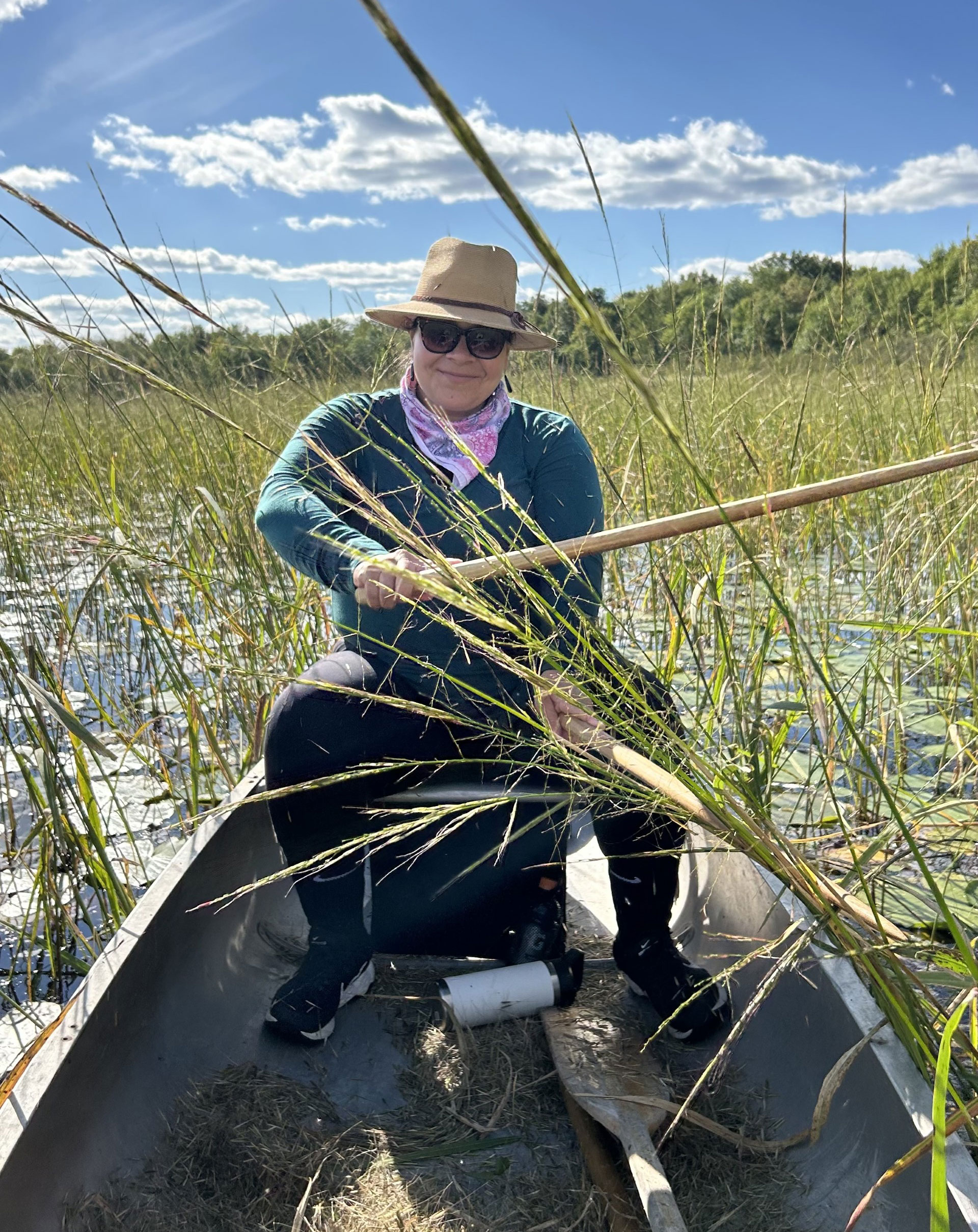
The Lac Courte Oreilles Tribal Governing Board has appointed Rosie Gonzalez to serve as the Tribe’s representative on the newly established Wisconsin Wild Rice Stewardship Council.
The council was created by executive order of Gov. Tony Evers and is tasked with promoting the stewardship and protection of wild rice across Wisconsin, in consultation with the Tribes of Wisconsin.
The goal of the council is to advance public education, strengthen policies on wild rice issues, and support long‑term protection efforts.
The Wild Rice Stewardship Council includes representatives from each of Wisconsin’s 11 federally recognized Tribes, along with representatives from the DNR, the Department of Agriculture, Trade and Consumer Protection, the Office of Environmental Justice, the Great Lakes Indian Fish & Wildlife Commission and other individuals appointed by the governor.
The council’s responsibilities include promoting the protection of wild rice in Wisconsin, providing recommendations to the DNR, working with the joint State/Tribal Wild Rice Management Committee, and developing policies, education initiatives, research and monitoring strategies. The council will also study the impacts of climate change on wild rice and consider the social, cultural, and recreational values associated with the resource.
Beginning in 2026, the first week of September will be recognized statewide as Wild Rice Week.
Gonzalez said the council’s collaborative approach is essential. “It’s important this committee was created to be intentionally proactive,” she said. “All tribes, the DNR, GLIFWC and other state agencies are working toward the same goal. We may come with different views, experiences, and education, but we’re working together for the same cause.”
As a representative for Lac Courte Oreilles, Gonzalez said she hopes to bring experience, cultural knowledge and education to the group.
“This is a new group, and I want to represent LCO well,” Gonzalez shared. “I want to bring our experiences, knowledge, education and culture to this group and help explain why it’s important to protect wild rice and keep it going. I’m excited to learn and be part of this challenge.”
Gonzalez emphasized that wild rice is more than a natural resource.
“This is a spiritual food given to us,” she said. “This is medicine for us. It gives us that spiritual energy to keep us going.”
Through the Wild Rice Stewardship Council, LCO and other Tribal Nations will have a direct role in shaping statewide efforts to protect wild rice and ensure its presence for future generations.