LAC COURTE OREILLES, Wis. – On April 13, 2026, the Lac Courte Oreilles Ojibwe University announced a revitalized four-year Bachelor of Science in Biology program centered on Ojibwe environmental knowledge and place-based learning, while also formalizing a new partnership with the Great Lakes Indian Fish & Wildlife Commission (GLIFWC) intended to expand training and career pathways for students entering natural resources fields.
Interim President Karen Breit thanked elders, students, faculty and community members for attending and said the university’s work is grounded in language, culture and a responsibility to prepare future generations to care for land and water alongside academic and leadership development.
The program was shaped by earlier community conversations and a feasibility study that included interviews with tribal natural resource departments, students, knowledge holders, and tribal leadership. A recurring concern was the difficulty many communities face in recruiting and retaining tribal professionals who can work across both Western science and traditional knowledge systems.
Erin LaFave, the faculty director for the new Natural Resources program, described it as a revamped biology bachelor’s designed for traditional and non-traditional students. The degree builds on the university’s previous associate-level offerings and a biology curriculum that had emphasized Western science, she said, but now places tribal knowledge systems and stewardship at the center of coursework.
“Coursework emphasizes place-based learning and the relationship between land, water, and all orders of nation,” LaFave said, adding that students can expect “a solid foundation in Ojibwe environmental knowledge, paired with the latest scientific methodologies.”
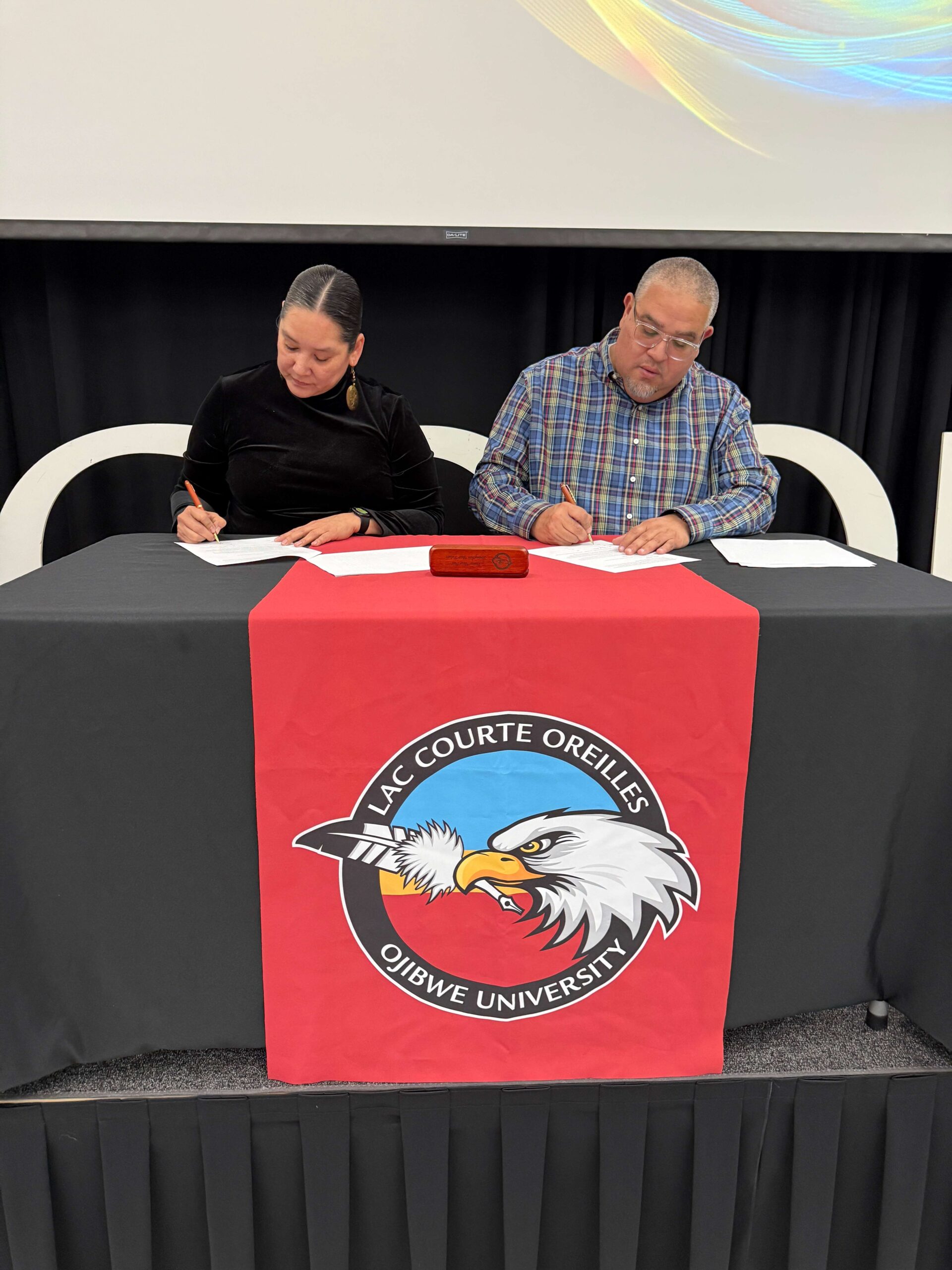
The announcement also included the signing of a memorandum of understanding between the university and GLIFWC.
GLIFWC Executive Administrator Jason Schlender said, “the partnership builds on a long-standing relationship between the organizations and reflects a commitment to developing tribal talent for natural resources work.” He described the agreement as a way to “give something back to the institution that helped launch his own education, while also supporting a healthy pool of capable and competent candidates to carry out stewardship and treaty-rights responsibilities.”
Registration is now open for the fall semester.
More information about the program can be found at: https://www.lco.edu/science
###